Making Matcha Work for a Small Operation
Before volume is predictable, avoiding dead stock outranks unit economics.
Buy small first
A kilogram runs cheaper per serving, and it is 50 cups at 20 g each.
At one cup a day that is fifty days. Against a post-opening guideline of two weeks to a month, the back half gets served after quality has fallen.
Start around 300 g and scale up once you know the numbers. Unit cost rises; waste and quality loss fall.
Multiple items from one purchase
The same powder supports:
- Iced and hot
- Lattes with dairy or soy
- Sparkling versions
- Sauce for soft serve or shaved ice
- An ingredient in baked goods
Faster turnover means finishing within the post-opening window.
No new equipment
A shaker, small whisk, or milk frother — all under a few thousand yen. An existing milk steamer works as-is.
Fix the procedure
To hold flavor steady during busy periods, write the numbers down.
Powder weight, water volume, paste time, pour order. Specified numerically, anyone produces the same result.
The hot-water paste step cannot be skipped — powder meeting a large volume of liquid at once will clump.
Rotate seasonally
Iced and shaved ice in summer, hot lattes in winter. One powder, all year.
Changing the item name by season is enough to keep it fresh.
Two sweetness levels
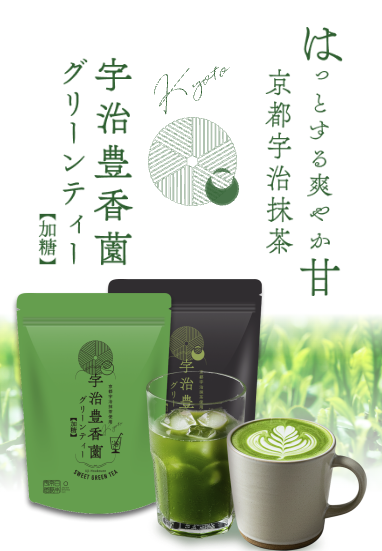
Keeping both sweetened powder and plain matcha widens the range.
Reduce the sweetened powder and add 1–2 g of plain matcha: less sugar, more tea character.
Cost is the total
Powder, milk, packaging, waste. Estimate servings about ten percent below the calculation.