
Sourcing Matcha for Export
Exporting adds requirements that domestic distribution does not impose.
Residue limits differ by country
Tea is agricultural, so pesticide residues from cultivation are regulated.
Each country sets its own limits, and a level permitted in Japan can exceed the threshold elsewhere. Regions with strict standards, such as the EU, also cover a longer list of compounds.
Some gardens are managed specifically for export, selecting treatments against destination requirements.
Matcha faces tighter conditions
For brewed tea, testing sometimes applies to the infusion. Residues that do not transfer into hot water do not reach the drinker.
Matcha is different. The whole ground leaf is consumed, so limits apply to the leaf itself.
Securing export-compliant raw material is the first constraint.
Labelling requirements
Destination language, allergen declarations, nutrition information. Rules vary.
Japanese labels cannot simply be applied and shipped.
"Green tea" will be misread
English green tea denotes the category of unoxidized tea, with no implication of sweetness.
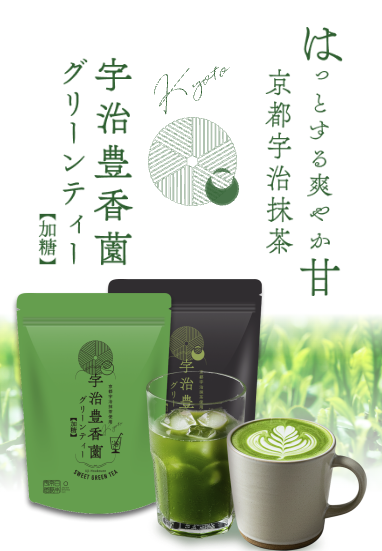
For sweetened products, sweetened matcha or matcha with sugar communicates accurately.
Origin is an asset
Uji and Kyoto function as brand marks internationally.
Japanese green tea exported to the US carries a unit price roughly five times that of Chinese green tea, and origin brand penetration is cited among the reasons. Where the information exists, state it.
Market conditions
Japan's 2025 green tea exports: roughly ¥72.1 billion in value, close to double the prior year, on 12,612 tonnes, about 1.4 times. A sixth consecutive record.
The US leads by volume at roughly 30 percent. European and ASEAN growth is driven by demand for powdered tea as a food ingredient.
Supply is the binding constraint
Demand growth does not produce supply growth.
Plants take years, shading requires labour, stone mills manage roughly 40 g per hour. Export-compliant material narrows the field further.
Establish that you can secure continuity before committing.
Figures reflect statistics as of 2025.