Packaging Has Two Jobs That Conflict
Looking good and protecting the contents are both required, and they do not always coexist.
The protective requirement
Matcha's green comes from chlorophyll, which degrades under light, heat, and air, shifting toward yellow and brown. Aroma compounds evaporate on a similar schedule.
Powder has far more surface area than whole leaf, so this proceeds quickly.
Hence:
- Aluminium-laminated or otherwise opaque materials
- Oxygen absorbers
- Nitrogen flushing
- Tight closures and double lids
Matcha is never sold in clear bags, because light degrades it.
The presentational requirement
To be chosen in a shop, the contents have to be legible.
That it is green powder, where it comes from, how much is in there. For a gift, how it looks when handed over also counts.
Where they collide
Showing the contents means a window. A window admits light.
Prioritise appearance and protection suffers; prioritise protection and the contents disappear.
How it gets resolved
Small windows Minimum viable area, opaque elsewhere.
An outer box Opaque inner bag, decoration on the box. The shelf sees the box; the powder stays protected.
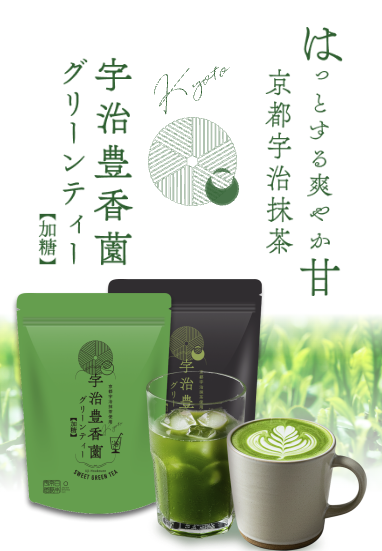
Photography instead An image on the package rather than a view of the contents. Best for protection.
Individual portions as a third option
Sticks seal each serving, so nothing beyond what is used sees air.
The outer packaging is then free to be designed however you like. Material cost and waste both increase.
For the buyer
With a windowed package, you cannot know how long it sat under shop lighting.
After purchase, protection is yours to provide. Keeping the bag inside a box or in a dark cupboard is most of it.