Is Matcha a Good Gift? What Makes It Work
Two qualities carry most of the weight: it gets used up, and preferences rarely clash.
It leaves nothing behind
Objects require space and taste alignment. A drink is consumed and gone. Nobody has to find a shelf for it.
Preferences are less of a gamble
Coffee and black tea divide people sharply. Plain matcha can also be a lot to handle for someone unaccustomed to it.
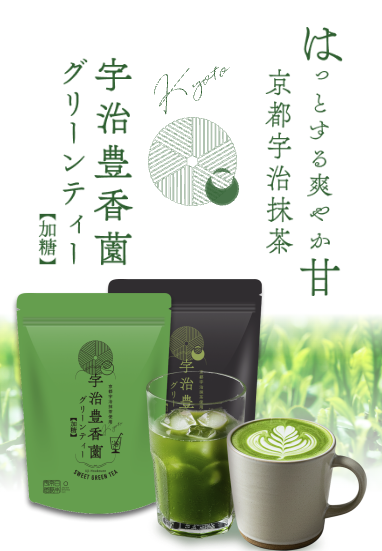
Sweetened matcha is approachable and works with water or milk, so the range of acceptable outcomes is wider.
It travels well
Powder is light, unbreakable, and shelf-stable. No refrigeration, no fragility. For sending or carrying, that matters.
At 20 g per cup, a 300 g package makes 15 servings — enough to last without becoming a burden.
It reads as Japanese
Matcha is recognized internationally now. As a gift from Japan it communicates something immediately.
One caveat: without preparation instructions, it often goes unused. Adding the ratios — 20 g per 150 ml water, 18 g per 150 ml milk — makes a real difference.
What to look at when choosing
Ingredient list — ordered by weight, so "matcha, sugar" versus "sugar, matcha" indicates the balance. Some products list only those two; others include dextrin, flavoring, and coloring.
Origin — Uji, near Kyoto, is the historic center of tencha production.
Size — matched to how often the recipient is likely to drink it.
When it is the wrong choice
Anyone limiting caffeine or sugar deserves a heads-up first. Matcha contains caffeine, and sweetened versions are largely sugar by weight.
Mentioning that strength is adjustable helps — it gives the recipient a way to make it fit.