Choosing a Tea When You Want Less Caffeine
Whether a drink contains caffeine depends on one thing: whether it was made from the tea plant.
Drinks with no caffeine at all
Barley tea (mugicha) — roasted barley, not tea leaf. No caffeine.
Buckwheat tea, black bean tea, rooibos — same situation. Not from the tea plant.
The word "tea" in a product name tells you nothing. The plant does.
Drinks made from tea leaf
Sencha, gyokuro, matcha, hojicha, bancha, black tea, and oolong all come from the same plant. Processing differs; the caffeine is present in all of them.
Hojicha is sometimes described as low in caffeine. It is lower, thanks to heavy roasting and the use of more mature leaves, but it is not zero — around 20 mg per 100 ml, the same range as sencha.
Genmaicha comes in at about 10 mg per 100 ml, since roasted rice replaces part of the leaf.
Matcha is easier to estimate
Steeped teas vary with water temperature and steeping time. The same leaf produces different results.
Matcha is mixed rather than steeped, so the amount is determined by how much powder you use. Less variability, easier to plan around.
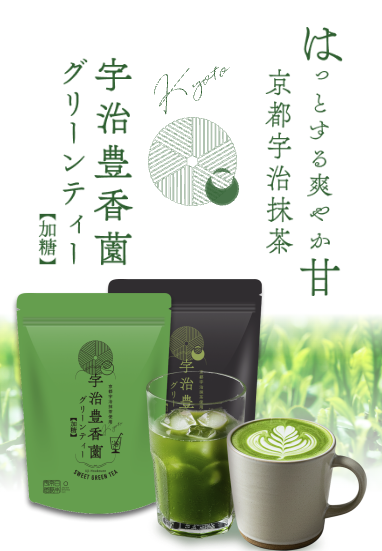
For sweetened products, it depends on the matcha-to-sugar ratio. Ingredient lists are ordered by weight, which gives you a rough indication.
Dilution as a strategy
Powder lets you set the serving size. If the standard is 20 g per 150 ml, using 10 g halves the matcha and the caffeine.
Flavor drops proportionally, but you can compensate — reduce the water to keep the ratio, or use milk for added body.
Adjusting strength to the occasion is a practical reason to choose powder over bottled drinks.
Sharing across a household
The same package can serve adults at full strength and children at half. Caffeine scales with concentration, so one product covers different needs.
For young children, anyone pregnant or nursing, or anyone advised to limit intake, a doctor or pharmacist can provide a specific figure to work with.