Do Powdered Tea Products Contain Preservatives?
Rarely, because they are not needed. The reason involves a concept called water activity.
Two kinds of water in food
Water in a food divides into free water and bound water. Microorganisms can only use free water.
Water activity (Aw) measures how much free water is available. Lower values mean less microbial growth.
Dried foods generally sit at or below Aw 0.65. In that range microorganisms cannot multiply, which makes preservatives pointless.
Drying, salting, and sugaring share one principle
All three traditional preservation methods remove free water.
Salt and sugar bind water molecules, reducing what is available. That is why candied fruit keeps.
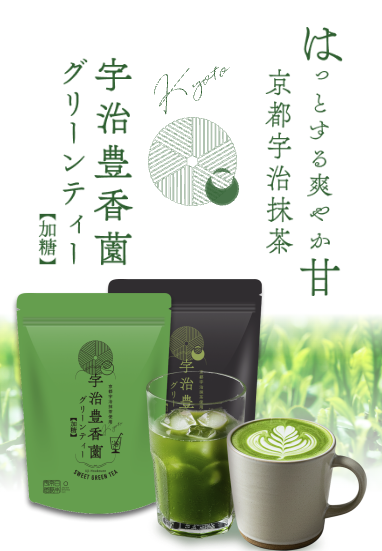
Sweetened matcha is both a dry powder and high in sugar — low water activity twice over.
Which means moisture is the real threat
The flip side: introduce water and the conditions change.
A wet spoon in the package, opening a cold container so condensation forms inside, storage somewhere humid. Each raises water activity.
Powder that has started to cake has absorbed moisture. That is the signal.
Checking the label
Preservatives, when used, must appear in the ingredient list with a function name — "preservative (potassium sorbate)" or similar.
What you more commonly find in powdered tea products is flavoring, coloring, emulsifiers, and antioxidants. These serve different purposes; antioxidants address oxidation by air rather than microbial growth.