How Much Vitamin C Is in Matcha?
Japan's Standard Tables of Food Composition list matcha at 60 mg per 100 g.
Preparation method changes what reaches you
Same leaf, different outcome depending on how you drink it.
Sencha is steeped and the leaves discarded. Vitamin C is water-soluble so a portion transfers, but not all of it — the remainder goes out with the leaves.
Matcha is ground leaf mixed into liquid, so what is in the leaf is what you consume.
It degrades with heat
Vitamin C breaks down when heated, and more is lost the longer it stays hot.
For a cup you mix and drink, the effect is negligible. It only becomes relevant if you hold a batch warm for hours.
Cold preparation avoids heat entirely, though it introduces the separate problem of powder dispersing less readily.
It also declines during storage
Oxidation reduces it over time, in parallel with the color shift you can see.
Powder opened weeks ago is not identical to freshly opened powder. Label figures reflect analysis at manufacture.
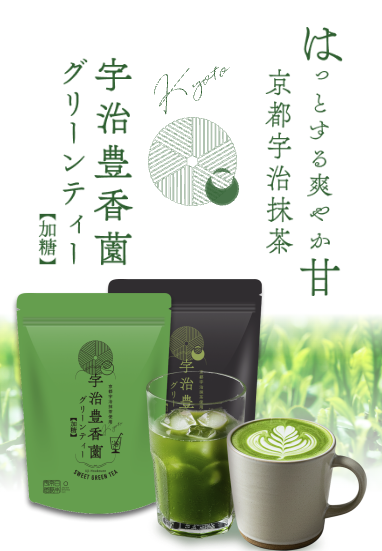
In sweetened products
Content scales with the matcha fraction. If a 20 g serving contains 5 g of matcha, the 60 mg per 100 g figure works out to roughly 3 mg.
Blend ratios differ by product, and vitamin C is not among the mandatory nutrition disclosures, so many labels omit it entirely.
One labeling note
When vitamin C or ascorbic acid appears in an ingredient list, it may be there as an antioxidant rather than for nutritional fortification.
Function names are required alongside the substance, so "antioxidant (vitamin C)" tells you which purpose applies.