Keeping Matcha Green: Why Coloring Gets Used
Matcha's green comes from chlorophyll. The pigment degrades under light, heat, and air, shifting toward yellow and brown.
Powder has far more surface area than whole leaf, so it changes faster.
What producers do about it
Build the color in the field Shading increases chlorophyll — with less light available, the plant produces more to compensate. Leaves grown under cover are a deeper green. Color originates in cultivation, not processing.
Avoid heat Stone mills turn slowly precisely because friction heat degrades color and aroma. That constraint is why output sits around 40 g per hour.
Block light and oxygen Opaque packaging, oxygen absorbers, nitrogen flushing. Matcha is never sold in clear bags for this reason.
Add antioxidants Vitamin C (ascorbic acid) oxidizes preferentially, slowing the degradation of other components.
When that is not enough
Products facing wide-ranging distribution conditions may not hold color through those measures alone. Coloring agents enter here — gardenia extract is a common choice.
Labels list them with a function name: "coloring (gardenia)".
Which breaks color as a quality signal
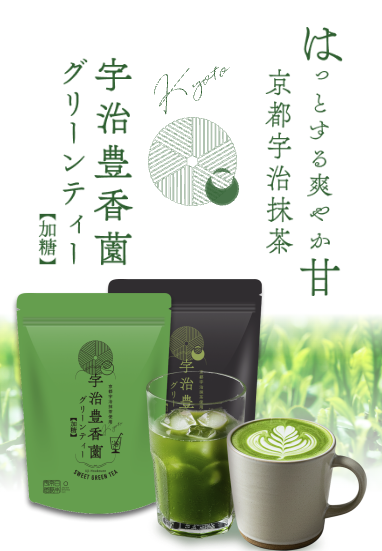
With coloring, a product containing little matcha can still look vividly green.
Visible color and matcha content are decoupled. Judging by appearance will mislead you.
The ingredient list is what remains. The order indicates whether matcha or sugar dominates, and coloring appears explicitly if present.
Fading is a sign of authenticity
Products without coloring dull over time. That is deterioration — and also evidence that the color was the material's own.
Note the shade when you open a package, and later comparison becomes straightforward.