
Where Matcha Price Differences Come From
The range is wide, and the reasons are distributed across the whole production sequence.
Cultivation
Shading Covers go over the field while shoots develop, with light levels managed until harvest. Several weeks of labor and materials.
Applied primarily to first flush; extending it to later harvests is not standard.
Harvest timing Tencha comes mainly from first flush, which draws on nutrients stored in the roots over winter and carries more L-theanine.
Cultivar Cultivars suited to shading are limited. Yabukita, the most widely planted cultivar in Japan, is poorly suited to tencha because its leaves carry a yellowish cast and do not darken well under cover.
Harvesting
Hand-picking allows selection of shoot condition. It costs considerably more than machine harvesting.
Sorting
Stems and veins are removed after drying. They are fibrous, will not mill to the same fineness, and produce grittiness and off-flavors if left in.
More thorough sorting means lower yield, which shows in price.
Milling
A stone mill turns slowly to avoid friction heat that would drive off aroma and degrade color. Roughly 40 g per hour.
Machine milling is far faster but produces coarser particles. Fine matcha reaches 1 to 5 microns; typical powdered tea runs 20 to 50.
It appears in the composition
NARO research reports that higher-priced matcha carries more theanine, with a distinguishable EGCG-to-EGC ratio.
Theanine is preserved by blocking sunlight. The cost of shading is legible in the analysis.
Sweetened products add a variable
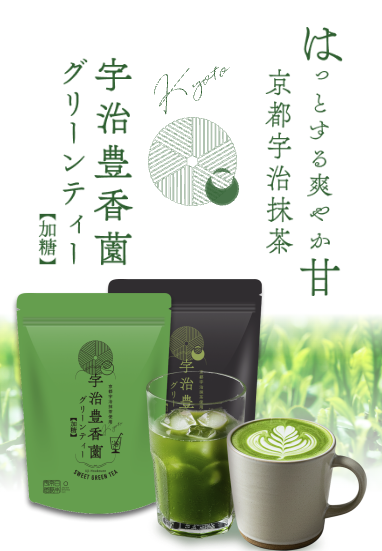
Blend ratio matters as much as matcha quality. More sugar lowers cost. Substituting powdered green tea for matcha lowers it further.
The ingredient order gives you the estimate.