Cocoa and Matcha: Two Powders That Behave Alike
The preparation is nearly identical. Dissolve a powder, add milk, sweetness already present. Which makes the differences easier to see.
Neither fully dissolves
Cocoa powder contains cacao solids that do not dissolve completely. Matcha is leaf particles that never dissolve at all.
Both end up as suspensions. Both settle if left standing.
Lumps form the same way
Pour liquid onto dry powder too quickly and only the outer surface wets, forming a barrier that keeps the interior dry.
Make a paste with a small amount of hot liquid first, then add the rest. The traditional cocoa technique works identically for matcha.
With milk
Both round out with dairy.
Cocoa contains fat, so it integrates readily. Matcha has none, which makes it more prone to separating — hence the value of dissolving in hot water before the milk goes in.
Caffeine
Cocoa contains some, less than coffee or tea, along with theobromine, a related compound.
Matcha's caffeine follows the amount of powder used. Reduce the powder and it falls proportionally.
Controlling sweetness
Unsweetened cocoa lets you add sugar to taste. Drinking cocoa mixes come pre-sweetened with milk powder.
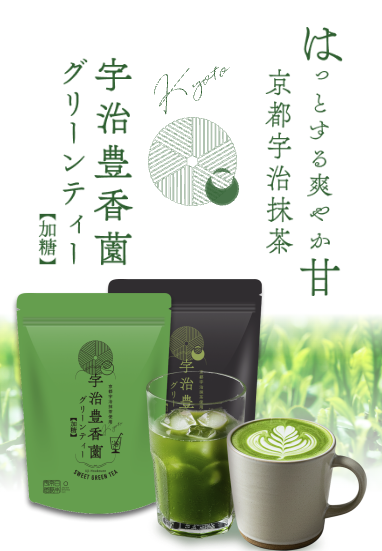
Sweetened matcha belongs to the second category. Dilution is possible; removing the sugar is not. For that you need plain matcha.
Color and storage
Cocoa is brown, and its color change is not visible.
Matcha's green comes from chlorophyll, which degrades under light, heat, and air. Color functions as a freshness indicator — a property specific to matcha.
Storage practice is otherwise the same. Avoid moisture, no wet spoons, and let a refrigerated container reach room temperature before opening.