Which Tea Goes with Food?
A drink served with a meal should clear the palate for the next bite. That framing makes the choice straightforward.
Sweet drinks compete with food
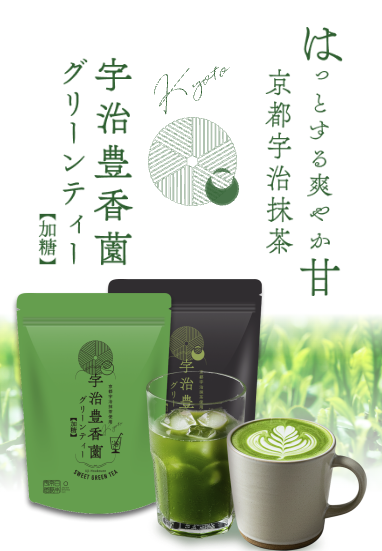
Sweetened matcha contains sugar — roughly 60 kcal for a 20 g serving with 15 g of sugar.
The sweetness argues with the food. As a mealtime drink it is awkward.
Heavily diluted it can work, but that is not what it is for.
Unsweetened teas that do work
Hojicha Roasted aroma that does not intrude. Handles rich dishes well, and its mild astringency suits both Japanese and Western food.
Sencha Astringency and savor, long paired with Japanese cuisine. Cuts through fish particularly well.
Genmaicha Roasted rice character, broadly compatible. At about 10 mg caffeine per 100 ml it is easy to serve to children.
Barley tea No caffeine, since it is not made from the tea plant. Minimal flavor of its own, so it goes with anything.
Oolong Long associated with rich food. Clean and unsweetened.
Matcha belongs after the meal
Straight matcha is concentrated and savory enough to compete with food.
Pairing it with wagashi works because it is a drink for the tea break or after eating.
If you insist on diluting
Around 10 g per 150 ml softens the sweetness considerably.
At that strength the matcha character has also mostly gone, so barley tea or hojicha is the more honest choice.
Temperature matters too
Cold reads less sweet. If serving sweetened matcha alongside food, iced interferes less.
Hot amplifies sweetness, which suits drinking it on its own after the meal.