Matcha as a Food Ingredient
International growth is not confined to drinking matcha. Demand as an ingredient has expanded substantially.
Powdered tea is driving exports
MAFF's analysis attributes export growth largely to expanding demand for powdered tea, including matcha, as a food ingredient in European, North American, and ASEAN markets — lattes and confectionery in particular.
Japan's 2025 green tea exports came to roughly ¥72.1 billion in value, close to double the prior year, on 12,612 tonnes, about 1.4 times.
Why it works as an ingredient
It provides color Green food ingredients are scarce. Matcha produces green without coloring agents, which makes it difficult to substitute.
The flavor is defined A small amount sets the direction. Bitterness and vegetal notes give sweet applications an edge.
It is a powder Fold it into batter, dissolve it into liquid, dust it over a finish. Few constraints on form.
Where it appears
Ice cream, gelato, cake, cookies, chocolate, bread.
Dairy softens the bitterness, so applications with fat content pair particularly well.
Drinking grade and baking grade differ
Confectionery matcha is formulated for heat stability and color development, and can taste bitter consumed straight.
Conversely, drinking-grade matcha loses aroma and shifts color under baking heat. Matcha's green comes from chlorophyll, which is heat-sensitive.
Grades exist because applications differ.
Managing color under heat
Shorten the heating, or add matcha after removing from heat.
With kanten: dissolve the agar, take the pan off the heat, then stir in matcha. That sequence preserves color.
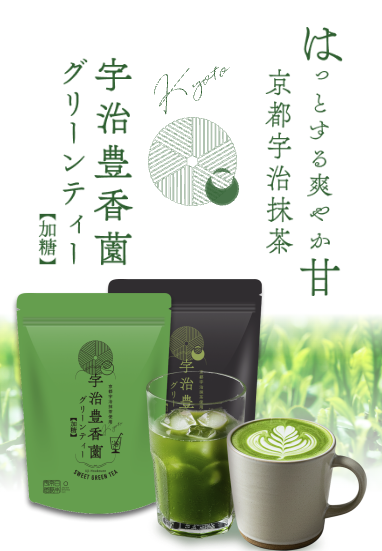
Using sweetened powder
It contains sugar, so recipes need adjusting.
It is also convenient. Stirred into yogurt, set into a milk jelly, poured over ice cream — as a sweet liquid, no sugar calculation is needed.
Figures reflect statistics as of 2025.