Matcha Abroad and the Drift in Meaning
Matcha now travels internationally. What it refers to has been shifting.
Sweet by default
Order a matcha latte abroad and sugar is standard. Unsweetened requires asking.
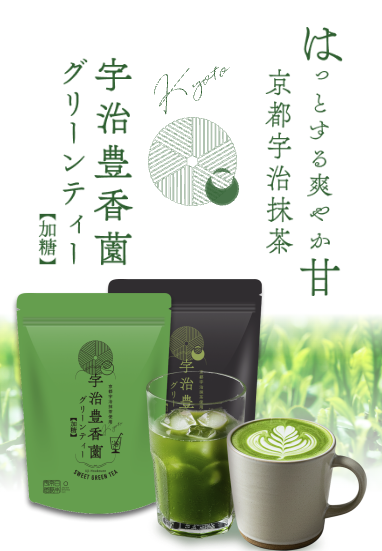
In Japan, matcha means unsweetened by default, and sweetened versions carry different names — sweetened matcha, matcha milk. That distinction is weaker abroad.
The quality range is wide
Products sold as matcha include powder from leaf never grown under shade, and green tea powder supplemented with flavoring and coloring.
No internationally standardized definition exists, so labels alone do not settle it.
Japan has a version of the same issue — contains matcha indicates presence, not quantity. Abroad, the raw material itself more often differs.
Applications multiplied
Beyond drinks: ice cream, cake, chocolate, smoothies, cocktails.
Matcha carries both color and flavor, which makes it unusually easy to work with. Green food ingredients are scarce, and that scarcity is part of the demand.
"Japanese tea equals matcha"
Abroad, matcha is what many people picture as Japanese tea.
Domestic consumption is dominated by sencha. The tea ceremony transmitted strongly, and the resulting impression diverges from the reality.
Terms shift when they cross borders
Not unique to matcha.
Japan's guriin tii was itself created by taking English green tea and narrowing the meaning. The same process, running in the other direction.
Which argues for explanation
Sweetened matcha or matcha with sugar communicates accurately for export.
Green tea alone will be read as unsweetened leaf tea. Adding ratios means the product gets used in households without equipment.
When a word's referent is unstable, the accompanying description does the work.