Drink or Dessert?
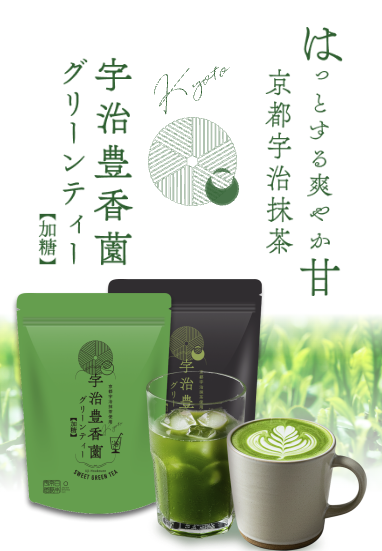
By composition, sweetened matcha belongs with sweet beverages rather than with tea.
The numbers
Sugar contributes about 4 kcal per gram. A 20 g serving containing 15 g of sugar is roughly 60 kcal.
Barley tea and water are zero. Grouping them together makes the sugar hard to see.
Compared with juice
Fruit juice also contains sugar, though from a different source — fruit sugars versus added sucrose.
Nutrition panels count both as carbohydrate. Juice brings other components along, so the composition differs, but by sweetness intensity a sweetened matcha can land in the same territory.
Concentration is the difference
Canned and bottled drinks are fixed at opening.
Powder is not. At the standard 20 g per 150 ml, halving to 10 g halves the sugar. You can move it toward beverage or toward dessert.
- Light (10–15 g): a mildly sweet drink
- Standard (20 g): a sweet drink
- Strong (25 g+): approaching dessert
Using it as dessert
Mixed thick, it works directly as a syrup over shaved ice or ice cream. No additional sugar required.
Stir it into yogurt, set it into a milk jelly, make it into a gel. As a liquid it doubles as a confectionery ingredient.
Where to file it
Water or unsweetened tea for hydration; matcha for taste. That division keeps quantity manageable.
Treating it as a water substitute does not work. Treating it as a snack does — same category as eating something sweet.
Temperature shifts the impression
Cold suppresses sweetness and reads more like a beverage. Hot amplifies it and reads more like dessert.
The same powder can go either direction depending on temperature and strength.