Matcha for Mother's Day or Father's Day
An annual occasion, which means finding something different from last year.
Consumables have an advantage
Flowers and objects remain. If the taste is wrong, they create a storage problem.
A drink gets used up. Giving the same thing annually does not accumulate.
You can drink it together
Not only handed over — prepared and shared on the spot.
Powder needs no equipment. A cup and a spoon suffice, so it works during a visit.
Consider their taste for sweetness
Sweetened matcha is a sweet drink. For someone who does not care for sweet things, plain matcha may suit better.
When unsure, adjustable strength helps. Less powder means less sweetness — something bottled drinks cannot offer.
Health considerations
Depending on age, sugar or caffeine may already be something they watch.
Matcha contains caffeine in proportion to the powder used. Sweetened products are largely sugar by weight.
Checking beforehand, where possible, is the safer route.
What to look at
Number of ingredients Fewer makes it easier to know what is being consumed. Some products contain only matcha and sugar.
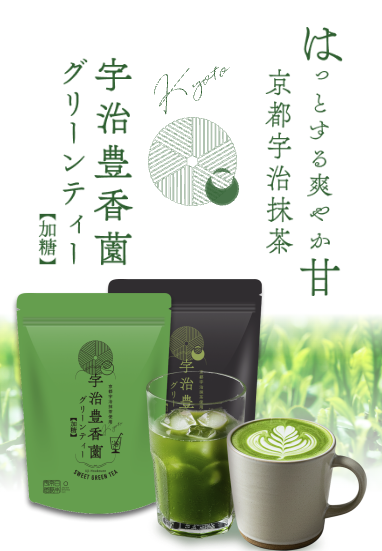
Origin Uji, near Kyoto, is the historic centre of tencha production. Stated origin gives you something to say when handing it over.
Packaging Matched to the occasion. Sometimes a formal box fits; sometimes something plainer is more natural.
Include the ratios
A note with preparation amounts improves the odds it gets used.
20 g per 150 ml water, 18 g per 150 ml milk. Particularly for someone unfamiliar with powdered tea.
The timing suits it
Mother's Day falls in May, Father's Day in June — both as the weather warms.
Cold preparation suits the season, and mixing powder into water requires nothing else.