What's on the Shelf Abroad
Stores carrying Japanese tea usually stock several distinct layers.
Teabag green tea
The most common format. Labeled green tea, containing unsweetened sencha or a blend.
Japanese, Chinese, and other origins all appear. Prices span a wide range, and it functions as an everyday drink.
Flavored green tea
Blended with jasmine, lemon, or mint. Still within the green tea category, though many combinations are uncommon in Japan.
Matcha powder
Sold as matcha. This layer varies most.
It spans stone-milled tencha from shaded cultivation, powder from leaf never grown under shade, and green tea powder supplemented with flavoring and coloring.
With no internationally standardized definition, all can carry the name in some jurisdictions.
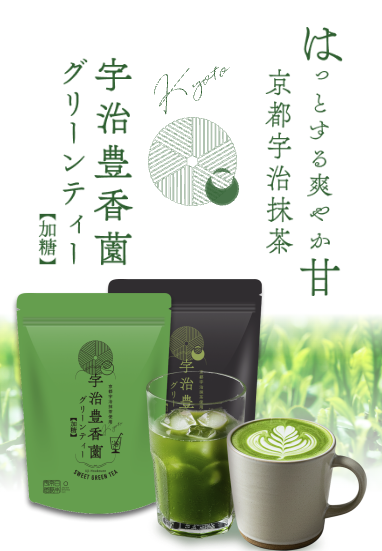
Sweetened latte mixes
Pre-sweetened, dissolving into a finished drink with hot water or milk.
Close in construction to Japanese sweetened matcha. Often labeled matcha latte mix.
Bottled tea
Sweetened versions are standard in some markets. Where unsweetened bottled tea is the norm in Japan, elsewhere sweet green tea is the default assumption.
The price spread on one shelf
Products differing substantially in raw material and processing sit side by side.
Japanese green tea exported to the US carries a unit price roughly five times that of Chinese green tea — a gap that appears directly as shelf price variation.
What to check
Ingredient list, origin statement, price.
Matcha on the front does not establish whether the leaf was shade-grown. Flavoring and coloring will appear on the list if present.
The same criteria that work in Japan work abroad.
Figures reflect statistics as of 2025.